I had thought this would be another quieter week. However, despite my plans for Monday I dropped my activities in favour of joining Ant and Gary and later Andrew in Slack activity. Ant had messaged us to see if we could join him to finalise the publication in the morning. We worked through for 6-7 hours tackling this and an additional task I certainly had not been aware of; creating a Landing (Splash) page from which people could press a button to link to the exhibition page. Using the idea of an envelope we added an address (Landings 2018 exhibition) and completed the design, still using our chosen Wes Anderson palette, with the Royal Mail Packet Ship stamp.
Fine tuning the formatting and chasing better resolution images were features of the day. Although there were breaks of time between communications while changes were made, keeping focussed was tiring but essential to get the work finished and ready for publishing.
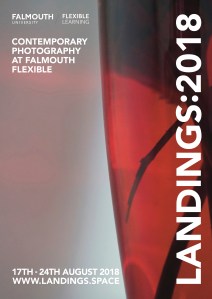
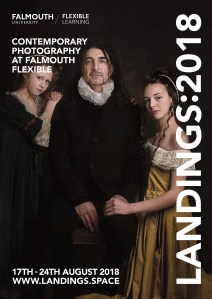
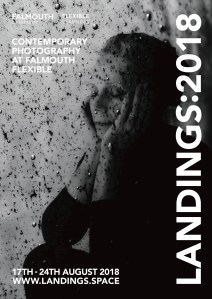
The three posters, one for each theme and the video complete with instructions for downloading the full version and placing on instagram (shorter version due to time limitations of this platform), have all been circulated. It is fascinating to see them take on new lives depending on who is circulating them across social media platforms and in their own blogs. Although the publication, now called a side:dish as it accompanied the exhibition page, has not yet been released by Falmouth University, it does feel as though we are letting go, launching products as if sending children off into the big wide world! I just hope that evidence of our parental nurturing on behalf of the course is well received.
Slightly out of order in these posts, these notes were submitted on the course platform during week 8. I am reviewing them now that I have run two workshops. I am feeling more confident with my ability too talk about and engage others in image making.
‘Weaknesses– I prefer to title it: things I have yet to learn/develop or where I do not have natural abilities (and need to collaborate with others)
Technical knowledge and competence re sizing and printing and products such as InDesign
Concerns about deviating too far from my project intentions with experimentation
Taking time to see what others value in my images which impedes continuing in specific activities-ie being too close to the subject matter and context
Reluctance to take images of people (fear of not doing it well enough?)
Lacking confidence in the quality and value of my images
Strengths
Ability and confidence to communicate to a variety of audiences
Having ideas about others work and hopefully being helpful!
Willingness to experiment
Improving compositional abilities
Remembering spare memory cards and camera battery when going out to take photographs.’
26-07-2018 Comment in response to my self evaluation from my colleague
“In my experience of your comments I think you are great at being encouraging and coming up with really helpful ideas to improve, develop and enhance others photography. To my mind you would make a great judge of photography. So, maybe given your communication skills and ideas that a workshop around critiquing participants’ work and finding ways to develop their image making would be a good fit for you.”
How interesting and useful to find that I have played to my strengths in the Landscapes to Nurdles Workshop and some of the skills my colleague identified have come to the fore with this activity. Food for though for future workshops and other types of educational activities, although perhaps commentator and reviewer rather than ‘judge’ at my stage of development!
Despite the publicity being late for the workshops (due to circumstances beyond my control) I had two enquiries about the second one. I contacted them and one person was available this week. Fortuitously the weather held and although we did not manage the lowest tide due to other commitments, it had just turned when we arrived. I like to catch the tide about an hour before its lowest point as what remains on the sea bed can be quite interesting just as the debris infested sea weed is on the highest point. However the purpose was not to pursue my project work about debris on beaches but rather how to take land and seascapes and ways of capturing small items such as nurdles on the beach. I tailored some of the images in the handout as well as the suggested competitions based on our pre-workshop chat and my knowledge of what the person was interested in; gardening and wildlife.
I prepared a what to bring and expect information sheet as well as a handout. The former was and the meeting arrangements were confirmed by email. On meeting we parked at the beach carpark and an expectations form was completed. This was used to have a discussion about what they hoped to get out of the session followed by a look at their camera and mobile phone and discussion about the controls. Reference was made to the handout, particularly the contents referring to exposure and composition. I should at this point out that on this occasion the participant is a friend who did genuinely want to advice on improving their image taking and had hardly used the phone to take photographs. They were interested in learning more about my project work as well. So in terms of getting to know someone and establishing honesty and trust between us before we set off for the beach….it was already present.
With people I have not met before I would be careful to find out more about them beforehand and have a longer introductory session before venturing down to the beach, particularly if working alone with a stranger in what can be a relatively isolated place depending on time of day. Thus thinking about potential risks as well as health and safety events is really important. We both carried water and I took a first aid kit in my bag the contents of which are displayed.
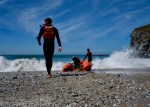
We agreed to cover one beach that is river estuary-side and then a linked second one facing the English channel. In all we spent 2.5 hours on the beaches, walking and talking about ways of photographing scenes and small items at our feet. I had taken a few things to experiment with; an empty photo frame, a crystal ball, tissue, tracing and ordinary paper and kitchen foil. I also took a very small set of three lenses for use with a mobile phone; wide angle, macro and fish eye. These were all enormously helpful and fun to play with as well as focussing our discussions about the use of light and composition, reflecting the contents of the handout I had made. We also had success with nurdle hunting while being watched with curiosity by all the holiday makers.
Seascape
Crystal ball positioning
Macro lens on mobile
Picturing beach debris
Nurdle hunting
Nurdle imaging
Framing natural and unnatural finds
Sarah Newton From Landscapes to Nurdles Workshop, 2018
The session concluded with a coffee and cake at the location. I sent my images of them for their approval and this came with a completed feedback sheet and some of the images they had taken during the workshop.
“Did it meet your expectations?
Yes, it did – and more.Lots of hints for the camera settings, which was very helpful to me.Very interesting to learn about the rule of thirds – it makes you think much more before just clicking the button!Also, thinking outside the box – not just “pretty” pictures, but using items that are lying around.
What would you have liked less of?
I think the balance was just right, between theory and practice.
What would you like more of?
Again, I think it was well balanced – I particularly liked exploring the use of different lenses, as well as other objects to make a more interesting photo.Also, I haven’t used the camera on my phone very much, so this was a useful addition to the morning.”
I had not realised until I prepared the what to expect and handout sheets that I did know a fair bit and could talk to someone else about photography and my chosen project. This was reinforced during the workshop when I found myself spontaneously offering information and advice without reference to the handout. I still do not know enough to be able to answer very technical questions but this activity proved to me that I know enough to make a workshop interesting, informative and fun. I thoroughly enjoyed myself as did my friend who communicated with me directly and on the feedback form.
A quieter week with chance to catch up a little on my own course work and assignment preparation. Answering queries from participants and regular communications with Ant and Andrew continued through the week.
2nd August designers meeting from 19:40 to 22:00pm or so!
All three of us met this time and worked principally on the publication and finalising the video but also going through the draft front entrance page to the exhibition. This page appeared as if our design features had not been taken into account (i.e. fonts, colours, placement of items etc). I noted the points to raise with Gary (done on 3rd August) who is the link or ‘go-between’ with the webmaster. Ant had a list of things relating to the publication layout and Andrew was to proof read everything so far and contact a tutor we had hoped would be able to contribute a commentary page to the side:line. Challenges included having to ask for better resolution images as we heard that some were not high enough as thumbnails and others not good enough for the publication. We do want to show work of the best quality knowing the images will be seen far and wide. It is not only Falmouth University and our reputations as designers at stake but most importantly, the reputations of the contributors.
We have some hope that the video and publication can be hosted by Falmouth but we need more details and confirmation about this. Further discussion about what to call the publication (zine, catalogue, book etc) culminated in a tired me flippantly suggesting ‘side:dish’ as it is an accompaniment to the main course, Landings 20128 site. Much to my surprise Ant and Andrew liked it and it seems to have stuck although my addition of a colon rather than a hyphen to match the colon in the Landings products titles does not seem to be sticking. Meetings flow easily with each of us able to air our opinions and reach consensus without issue. They also seem to be getting longer!
HighIights of the week included approval from Rachel Akerman to use one or both of two of her packet ship illustrations in the publication. I feel this is a brilliant coup as she attended Falmouth for her degree, thus there is a double connection with Landings. After further research I found two stamps with images of packet ships, one mentioning Falmouth. Andrew and I checked the correct referencing for the stamps and selected the Falmouth one as the best to meet our needs.
Due to run on 5th August there were no attendees for a no camera workshop planned to include experience of pinhole camera work, making cyanotypes and scanning to make images. I advertised in the Parish magazine which was delayed at the printers so was only distributed a couple of days prior to the workshop which was also due to take place a day after the local garden and produce show (which many people were very involved with) and many others are on holiday.
However, I have had enquiries for the second one I advertised and hope that can go ahead in the next couple of weeks. Landscapes to Nurdles, ways of photographing while on a walk on the beach, relates directly to my project. I have obtained approval from the owners to take a small group out for this purpose.
Although a little disappointed at first I have used the time allocated to do my workshop myself! This has been invaluable in making sure with the leader hat on everything is organised and with the participant hat on I enjoy the experience. I did not talk out loud to myself but did think through conversations as both workshop leader and participant trying to anticipate what might arise.
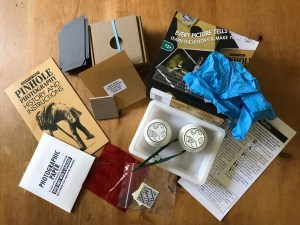
Preparations included the advert, a what to expect sheet to give people beforehand and an illustrated technique booklet for people to use during the workshop and to take home. In addition I ordered chemicals and paper for the cyanotypes and a small wooden pinhole camera. I also made a pinhole camera from a wine box and one from a matchbox. The kitchen table was the work bench and the bathroom was darkened with a torch and red gel to make a dark room. Plastic trays were set out with the developer and fixer and water wash ready for the pinhole and cyanotype results.
I have benefited from this exercise in having ideas about smooth running of the workshop as well as having produced images for my own use as well as demonstration purposes when the workshop runs. I will consider running it during the recess after this module although if any interest is shown in the next few days I may run it before then.
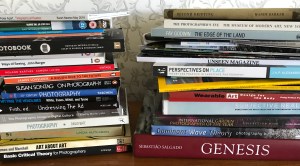
Starting with Shelfies and Pilibraries we took images of our own shelves and piles. I have both. The shelves tend to be associated with my profession and piles with the growing pile of photography publications including mine made Ed Ruscha style. I also showed how a book can be a shelf as one acts like a docking station ’tilt’ for my laptop! I think about this book and its contents everyday, good news for my learning as it is authored by the course director!
Sarah Newton My photography Pilibrary, 2018
Sarah Newton My very useful docking station tilt shelf, 2018
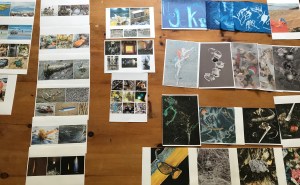
Selecting images relating to our projects was the next more substantial challenge. Going back through mine since the start of the course I initially looked at those I had submitted for Work in Progress assignments. I then went back through to pick up all those not included in the assignments but for which I had a memory and this would be their opportunity to be ‘shown’ too. With nearly 200 I was starting to get lost in the forest!
Sarah Newton Selection of Beauty and the Beach… images, made 2017-2018
Moving them around on screen and draft prints outs on cheap paper they began to work into themes over time then groups or collections that crossed the time boundaries. I started to see a progression in my development with diversifications into sub-projects along the way.
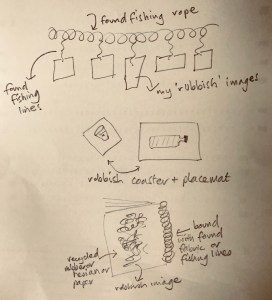
Working under a time pressure as this was a task for the week I moved on to the third stage of putting them into a sequence, explaining how they were to be displayed in a publication and presenting a mock up on film. This part of the task was as frustrating if not more so than the overview and selection of images. I wanted more time to be able to get hold of low environmental impact and recycled materials with which to make a physical copy to film. I have come across photorag paper made from cotton, seaweed paper, rice paper, plant based papers and even paper made from stone. I have also seen notebook covers made from recycled plastic bottles and tyres.
Sarah Newton Original design for a publication, 2018
For the purposes of the task I filmed me turning A4 pages on which draft quality images were printed (to save ink). Uploading did not work so I resorted to still images with a flick over effect using Camtasia.
This felt like a very busy week and I was not satisfied with my outcome. However, the review of images was enlightening and my interest in materials to use in a publication has grown and also been inspired by the creative productions of others on the course. Suggestions received from my course varied from including the range of images since the project began to focussing on recent images which are abstractions of beach debris and one that suggested several books! In addition, webinar discussions led to the offer of editorship by my tutor as I was too close to the subject matter and images to see the ‘intrigue’ and ‘Beauty’ (as in the project title Beauty and the Beach…) others were seeing and feeling about them. A week later her editorship made me realise the value of such a task as it is not always possible to predict how viewers will see and respond to your own images. I will take this lesson and her suggestions forward into my thinking and planning for an actual publication.










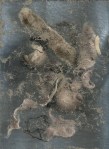


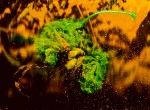

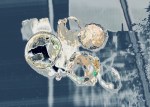
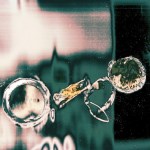










 Sarah Newton Photography