Week 4: Begin at the beginning

Week 4: Begin at the Beginning


Today I want you to rediscover why you love to take photographs.

Review your earliest work an reflect: What do you see in it? Can you find a theme that connects it to the work you make today? What do you like and dislike about the early work? What was it about these photographs that made you want to be a photographer?

Use the space below to share and discuss these photographs with your classmates. Comment on the work of your peers – especially if you are familiar with the kind of work they are doing now. Tell them what you see in their early work and how it connects to what they do now.


Sunday 15 Oct 2017

Here’s one I took of my French exchange penfriend from Paris, Carole, while visiting my grandparents in Derbyshire. I think I must have been around 14 years old. I still recall this image despite not seeing it for years and wonder what she is doing now. I remember being very impressed by her red great coat which she wore stylishly on her shoulders without putting her arms in.

Looking at it more closely for this exercise I can see that I had some natural inclination towards thirds both vertically and horizontally! There is also something about objects in front and in the distance, seeing natural complex patterns in the branches and using them to frame the near and far features all of which I think my current work embodies. Choosing to take Carole in the countryside rather than against the wall of a building or indoors for example is perhaps something I still prefer to do. I think this image captured a ‘”timeless” moment in time when we were enjoying learning about each other’s cultures and languages.

I did not then know I would come to photography in the way I have now. I was keen on art but not very good at drawing and enjoyed being able to capture teenage moments accurately through photography. This has continued throughout my career as a psychologist. So there was not just one eureka moment but a gradual growing strength of interest and intention to maintain my passion, improve my ability and develop my confidence; enough to start sharing and leaning from others.

Having posted this image and my thoughts I was pleased to have received several comments from course colleagues and my tutor either commenting on how it evoked memories for them, was an example of a time before SLR and DSLR and the quality of images that could be produced then or how the composition and interest in nature comes through in my current photography.

I commented on images posted by colleagues both those that were of a similar age to mine and those that were since the early 2000s. It seems that some did not have /could not access any early records for various reasons and others had come to photography later in life or were young so their images did not go as far back as mine!

Week 3 Instagram

Week 3: Instagram
Anna-Maria Pfab

I would argue Instagram is currently the most effective social media platform for self promotion. If you have not got an Instagram account already, then I would like you to set one up.

This week I want you to try and create and implement an Instagram strategy that you feel will help you reach future, potential clients (whether ad agencies, curators or potential collectors), and then develop your account so you have 30 followers over the course of a week.

Use the space below to discuss your strategy and the results with your peers. What has worked? What has not worked? Comment on each other’s posts with constructive criticism.


I have set up an Instagram account for the first time @sarahnewtonphotography

https://www.instagram.com/sarahnewtonphotography/

I started on Saturday afternoon and have focussed on my project Beauty and the Beach…

Comments

It is getting a little addictive….especially as I misread/read too quickly the instructions for the task. I have been aiming for 300 followers not 30!!!!! So lesson learned, a little like reading an exam question thoroughly before answering!

What else have I learned? You can get friends and family responding as well as people from all over the world who you may not have expected. I seem to have struck a chord with fishermen!

My son put out an appeal for others to follow me from his account! This created some additions.

I was informed by someone else that you can pay people to add lots of tags and also get your site following lots of others if you want to get hundreds/thousands/millions of followers. I have been contacted by one or two since I started.

Some links are made that seem to be automated ?bots?

Some are from organisations saying I have won a drone or can win a Nikon D5300 if I click various buttons……

Other links are decidedly suspect.

Clearly focussing on your key associations for the work you are wishing to promote is important Although I have tried using  #tags I am doing so from a limited viewpoint. I know some organisations who may have an interest in my images but many associated services/sites/magazines etc are not yet known to me and my spotting them on Instagram or guessing what their tag may be is pretty random at the moment. So doing my homework first is another lesson I have learned and would save a huge amount of time on Instagram.

Does it really matter how many followers you have? I suspect the numbers do not equate to productivity in terms of opportunities that may arise. How many photographers get work through Instagram?

Results to date

18 posts    84 followers  I am following 211

Of the 18 images all have multiple likes with one leading at 17 Rock n’Ropes and the next down being 12 Greenpeace Arctic Sunrise! So what does a like mean? What is its value in terms of the ratio of time and effort choosing and preparing an image for Instagram to having something happen as a positive outcome?

More to be said at the end of this week…..

Saturday afternoon

It is one week since setting up my Instagram account. On Thursday/early Friday I peaked with 130 followers. Although more have said they are now following  since then there has clearly been a dropping out too. As of Saturday afternoon  I am following 276, have posted 36 images including one that was not mine and was a course colleague seeing how far a post could reach. I now have 122 followers.

I think that not posting as much in the past few days has meant a drop in interest/ boredom with just posting images of rubbish in situ on beaches. Also people who responded to the call to raise the number of my followers (by my son) may have done that initially and have withdrawn as they had no interest in my theme and images in the first place.

I have observed different interest groups responding to different posts. For example, individuals and groups who fish like the ropes and nets images and fans of beer and wine like the cans and bottles images.

I am planning to post more images soon, still on my project theme Beauty and the Beach… and will see whether different interest groups emerge.

The process of uploading to Instagram has reminded me of feeding Tamagotchi’s in the past. The Instagram beast needs regular feeding with images if one is to keep a reasonable profile going. But what is a reasonable profile and is it good to have lots of followers rather than fewer (quality not quantity)? I can see it would be easier to develop some level of relationship with followers with fewer so that you strengthen  and build a solid fan base rather than fleeting  and non-dependable temporary followers who are just passing through.

At the end of the day if it is being used as a marketing tool to sell images and products, regardless of how well you hashtag, it is like selling a house. You may have lots of views but the unique features of your house will only be appreciated by a few. With that in mind is it better to target the people who are most likely to purchase through specific activities outside Instagram (i.e. direct contact methods and other internet platforms)?

Coincidentally The Times published an article in the Magazine on Saturday at the end of my week. “Am I too old to be an Instagram Influencer?” by Polly Vernon Although my project is not about fashion or looks or promoting particular brands as ‘influencers’ seem to be it did make me wonder whether age is an issue. Not necessarily older age where specific interests may be shared with like minded others but because some of my research this week has shown very young people using it and as with other social media platforms there may be potential problems arising from the information they are giving about age and location and the items they are posting.

https://www.thetimes.co.uk/magazine/the-times-magazine/am-i-too-old-to-be-an-instagram-influencer-r73zxxbpl

Week 2 Whose image is it anyway?

Week 2 Whose Image is it anyway?

This week we are looking at business basics and business plans. We will also briefly touch on copyright law.

There have been some notable art copyright cases in recent decades. One of the most significant is French photographer Patrick Cariou’s claim, suing Richard Prince and his gallery, Gagosian, for copyright infringement. Read more about the case here (Links to an external site.)Links to an external site., or an even more detailed report here (Links to an external site.)Links to an external site..

Please post in the forum below whether you agree or disagree with the court’s final decision, and why. Comment and discuss with your peers.


3 Oct 2017
Copyright is a minefield whether to do with art, music, inventions, products etc etc. Everyday we see close copies or blatant replicas maybe with one or two small almost imperceptible differences from the original. For me it is a question of ethics and relating to the person who made the original work/item to ask permission or negotiate a profit share. However I realise that aspirations for profit dominate and that individuals and corporations will always find ways to do the minimum to stay on the right side of the law. I have often wondered about photographers who photograph images from books/artwork and apply layers using these pieces to their own images to create novel effects. I guess some maybe so old they are out of copyright years. Visiting the Rijks museum the other day and seeing The Night Watch by Rembrant was interesting not only because it is huge and impressive but hung to it’s right was a much smaller copy by another artist Gerrit Lundens. In the “olden days” original artists were flattered to be copied and the work of the copier was revered as well as that of the original artist. It is a valuable copy of the original which was trimmed in size taking out some of the notable details to fit through a doorway (the museum guide told me!). The Night Watch has inspired many musicians, authors, artists and others who have recreated the image in various forms. For me that raises another matter. Is it the intention of photographers to capture a moment or make a creation for a moment in time or is it the intention to create something that inspires new works in various forms well into the future so that the original photographer’s name (if credited as inspiration) lives on well beyond their life time?
http://www.nationalgallery.org.uk/paintings/gerrit-lundens-after-rembrandt-the-company-of-captain-banning-cocq-the-nightwatch
(Links to an external site.)
Links to an external site.
http://www.telegraph.co.uk/culture/culturevideo/artvideo/9969256/Cultured-flashmob-recreates-Rembrandts-The-Night-Watch.html
(Links to an external site.)
Links to an external site.

Week 2 Challenge: Let’s talk business

Week 2 Challenge: Let’s talk business

In this week’s presentations you have learned a little bit about the importance of running your business properly to be successful. For this week’s activity therefore, I want you to think about the following three areas in relation to your own practice:
• A Mission Statement
• The Product
• The Market
You will have thought about these things previously in the course but this is an opportunity to consider them from a more commercial angle.
Write 150 words for each of these points. You will informally present the outcome in this week’s webinar. Feel free to post your thoughts below and discuss amongst the group.

Week 2 Let’s talk business

4 Oct 2017

SARAH NEWTON PHOTOGRAPHY
Business Plan
Prepared for: MA Photography Prepared by: Sarah Newton
4th October 2017
Version: 1

Mission
To explore beaches and waterside locations noticing and recording both the beauty of the landscapes and the potential for harm that debris can cause to animals, humans and the environment.
Product
• Images are of three types:
• Landscapes
• Debris
• Landscapes with debris present
◦ The photographic images are presented using and on a range of materials. The materials include various papers, wood, canvas, foam, aluminium, glass, light boxes and billboards.
◦ They are accessible in both physical and digital forms for to the public consumption as free information as well as being available to purchase. 
Market
◦ Market research of similar businesses state their existing customers and interested parties include children and adults, males and females, local, national and world-wide populations and corporations.
◦ This business attracts new audiences and potential customers through information drops (paper and digital), media coverage and illustrated talks in schools, to local organisations in villages, as well as at beach festivals and cleaning events.
◦ Exposure routes include exhibitions, online gallery and blogs. Exhibits are displayed on beaches or in towns (open air mobile display) with appropriate council permissions.
◦ Agreements are in place about copyright and payments with reference to the use of the images by organisations involved with promoting visitor numbers (e.g. Councils, National Trust) and others directly tackling coastal debris (e.g. Surfers against Sewage, Marine Conservation Society).
SARAH NEWTON PHOTOGRAPHY

Week 13:

Week 13: Assessment break challenge
The (Photographer’s) Apprentice

During the assessment break, you are invited to work with another photographer or creative practitioner. This could just be for a day or even half a day, or it might be longer if you are able to arrange this.

You should research photographers whose work you admire, and who you feel like you could learn from, and – if at all possible – lives somewhere near to you. Contact him or her and offer your services. This can be in whatever shape or form you like: you could be asking to assist them, shadow them, help them in the office or with their archive. Whatever seems appropriate, and whatever you feel comfortable with.

Think carefully about each step. Consider who you are writing to and why, and the way you contact them. Document the process from beginning to end.

Depending on your location and circumstances, some will find this a lot more difficult a task to organise than others, and we do not wish for this challenge to be a distraction from getting on your own work. But time will be allocated at the beginning of week 1 of the next semester to share your experiences.

I wondered how I was going to achieve this task as I had several activities including visitors planned for the break. Three opportunities emerged and an additional one is to be considered for the future:

I had already booked onto a product photography day workshop at Plymouth College of Art and Design on 25th August. There were 8 attendees and one tutor. Most attendees in were producers ( e.g. three jewellers and an interior designer) or in retail and wanted to know how to better photograph and present their wares on line. One was a tutor and fashion photographer at the college. I was there to learn more about the photographic techniques in relation to taking images of debris I have been photographing for my project. Ultimately the prop I had taken along (a rusty Jeyes cleaning fluid can with its’ danger poison sign) was used by the tutor for demonstration purposes and then one of the two groups we were split into used it in their depiction of sugared doughnuts and how bad the sugar is for you. In addition no one else had a DSLR camera with them so I set up mine and adjusted settings according to what the second group wanted. We had been asked to show doughnuts as delicious and inviting. So although I was an attendee I was also contributing in a small unplanned and nonarranged way. Photo courtesy of the group and tutor:

One attendee on the workshop worked at the college and agreed to let me assist with a fashion shoot she had planned the following week. Unfortunately this was cancelled as the model was unwell and although promised a rescheduled opportunity did not emerge. I did not pursue this either as I did not want to push the arrangement in case the person had changed their mind about having me alongside. I may contact her again in a more general way without asking directly for her time at some point in the future.

I contacted the Leader of Yealm U3A Photography Project, Sue Brown. Sue is a well known and respected photographer who specialises in fine art landscapes and seascapes. http://www.susanbrownphotography.co.uk . My initial email enquiring about the possibility of time with Sue was not received. Having corrected the email address I sent it again. Sue was very generous and offered me three opportunities: to spend a few hours on office based tasks, to have time accompanying her on an image taking outing to the beach and to assist in mounting an exhibition. I replied asking if to experience all three  would be acceptable and although Sue has known me for a little while, I included the link to the Adobe Spark video I had made for the first module to show where I was coming from and a little about my project. Sue responded with a link to a togcast  in which she was interviewed which informed me about her photographic career www.thetogcast.com .

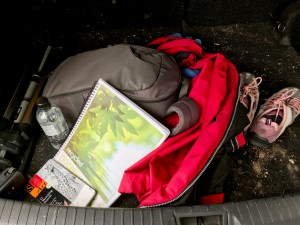
4th October 2017 10:30am to 13:30pm. I was found myself keen to be on time, to be prepared (boots, coat, cameras, water, notebook, pens etc all packed into car boot) and to make sure I thanked Sue for her time (bottle of wine). My first task was attaching backings to already mounted images and placing them in cellophane wrappers to be displayed for purchase. My second was to hand write luggage labels with the names of framed images and the prices ready to be attached to and hang down from the frames. We then loaded the car and went to the location (Chicken Shed) for the Arts Trail which features 60 artists in 18 workshops, galleries and exhibition halls organised by the South Hams Arts Forum 14th -29th October 2017 http://www.shaf.org.uk/the-arts-trail.html. Sue exhibits as one of a group of 6 local artists who specialise in sculpture, ceramics, paintings, vintage materials and wearable art. I organised the display of Sue’s cards for purchase and assisted with labels on frames and discussed plans for arranging locations for the rest of Sue’s contributions. I enjoyed all the activities, learning some of the tasks I will need to be familiar with as I develop my own photography. I am very grateful for Sue being able to spare time for me. Sue is away for a while now but we have arranged to meet again on 6th December when I will be assisting her with her exhibition organised by  the Devon Guild of Craftsmen at Bovey Tracey 9th December 2017 to 15th January 2018.  http://arenaphotographers.com/news/exhibition-news-susan-brown-at-showcase-gallery/ . Hopefully when weather permits we may be able to fit in an outing to the beach.

I have thought about contacting an artist and photographer I met at an arts fair locally some time ago Nigel Grist  http://www.theunseenview.comI then saw his images displayed in an exhibition space. He   is a member of the Creative Collective and  his interests are natural history and landscapes https://creativecollectivesouthhams.co.uk/nigel-grist/. I think he would be a very useful contact for my project.


Week 1: Looking Back

Anna-Maria Pfab
“This forum activity is an opportunity to discuss project work produced during the break.

In the space below, please use the following structure to tell us where you are with your projects:

Introduce the topic of your project
Introduce the area of concern or your angle
Summarise work made in previous modules
Describe the intentions you had for the break
Share work produced during the break: three – five images is enough
Make sure to look at the work of your peers and comment, help, brainstorm together.”

week 1- My project and work achieved in the break

My project is Beauty and the Beach…

The three dots signify that it is not all that the words in the title may convey as I am photographing debris, including plastics, on beaches and waterside locations. Having monitored in situ and collected some rubbish from various locations in Devon, Cornwall, London and now the Netherlands I am starting to think about how to process, present and display in ways that capture attention.

The visit to Amsterdam and Unseen gave me some ideas as did my subsequent visit to the Dutch seaside where I found a huge set of billboards on a public walkway at the beach all showing data and images of the damage to animals and the environment that debris can cause. Several images promoted taking rubbish off the beach whether just visiting or attending a beach clean event. One of my ideas in my proposal was to do something similar at the entrance to beaches and in city centres in Devon and Cornwall so finding such a display has been helpful.


I have started to experiment with processing but as yet I only seem to make the images interesting and to invite discussion about the back story but with no impactful message to avoid littering in the first place.


In July I attended the 5 day Adobe Photoshop course at Falmouth. I have not spent as much time practicing what I learned over the break as I had hoped. However, I have managed to visit more beaches and waterside locations both taking visitors and on my own. I have also attended two formal Marine Conservation Society/National Trust beach cleans recording and collecting debris. On each visit I have found debris or wildlife or views that I had not “seen” before. I am keeping an open mind as to the final direction and focus of the project as it is offering up so many possibilities.

Landscape: In Amsterdam I presented a landscape image taken on one of the beach cleans, this having been taken because I liked and wondered about the structure in the foreground. I am planning to gain experience as an “apprentice” next week and in December with a local landscape photographer.

Products: I attended a one day workshop on Product Photography on 25th August at Plymouth College of Art and Design with the intention of improving my ability to present my beach finds. Interestingly I was the only “photographer”, others were producers of things wanting to take better images, mainly on phones, for their websites. Hopefully the contacts I made will lead to some collaborative work.

Portraits: I am pleased to report having taken an image of a person (with their permission) facing me. My previous images of people have tended to be at a distance or with people with their backs to me.


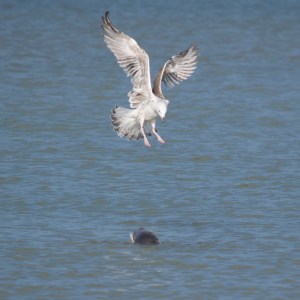
Wildlife: I am still drawn to my pre course love of nature and wildlife photography albeit mainly associated with watery locations now. This image was taken on the same Dutch beach just after dog walker passed me. It is a seagull dive bombing a seal for the fish s/he had caught.


Week 1: One image a day holds the photographer at bay!

Week 1 Challenge : Time to Play
Anna-Maria Pfab

Throughout this module we will be asking you to carry out activities from The Photographer’s Playbook. All of these activities are carefully selected and aim to make you think about your practice and where it might be positioned in a professional context.

This week’s activity is from Michael Christopher Brown, an American photographer represented by Magnum Photos. He has gained an international reputation, especially for his documentation of the 2011 Libyan Civil War, which was published in a monograph titled Libyan Sugar, by Twin Palms Publishers in 2016.

“For much of my career, photography was more of a way to make money than a compulsion. I spent a lot of time communicating ideas that were not my own. Two years ago, during the Libyan Revolution, I began taking a more honest path with regards to photography. It had to do with finding a voice. An interesting exercise that anyone can do is to take one photograph per day for a week. The idea is to be focused enough to only photograph what is absolutely necessary. What are the seven pictures that not only define the week, but yourself? What if you were to die next week and these were to be the last seven pictures of your life? This exercise can be an important analysis of the self in relation to life and photography.”

Task

Post your seven pictures in the forum space below and discuss what you have discovered.

I have presented my seven one a day progress in Keynote not having used this format before. Please click on the link below to see my response to this challenge.

One image a day holds the photographer at bay!

Week 7 Peer commissioned micro projects

We were asked to commission and in turn be commissioned by another with photographic projects. The shooting should last no more than 2 hours.

“Week 7 Activity: Peer Commissioned Micro Project

Taking inspiration from the practitioners discussed during this topic, use this forum to form pairs and set each other a short brief to work on throughout the week. You should be sympathetic to each other’s locations, circumstances, resources, commitments and current practice. The shoot should not exceed a couple of hours at most, and you may be as prescriptive as you like.

When your partner sends you their brief for you to consider and then fulfill, try to keep track of your creative thought process.

You will need to compile your edited project and post this in your CRJ.”

I sent this project to another student:

“MA Photography

Week 7 Peer commissioned project

Please prepare 7 images to represent 7 emotional states in colour:

Happiness

Enthusiasm

Contentment

Indifference

Sadness

Anger

Fear

The images must feature or be dominated by the colour and do not need to include humans or animals.

Thank you,

Sarah Newton”

My colleague replied with images of a teddy bear and used light (colour gels on a two channel speed light so achieve various colours and shadows) supported by small props to complete the brief successfully. By having the same subject to focus on in each image the viewer could concentrate on the mood and expression conveyed.

 I replied:
“Thank you …so clever to use one object and the colour and lighting really conveyed mood! Also I could quite believe the bear changed facial expression and how his eyes looked for some of the emotions!
Job well done!
Thank you again
Sarah”
I linked into a group of three students and was commissioned by one:
“Shoot Brief
1.) Using food items create flowers, trees (nature).
2.) The message/call to action conveyed is you want people to eat healthy
3.) The mood of the images must be fun and artistic
a.) Energy
b.) fun”
My thoughts immediately turned to the imaginative and attractive ways chefs present food as well as the health promotion publicity for eating ‘5 a day’ referring to fruit and vegetables (which has in recent times been updated to 10 a day!). As I was due to go shopping I added fruit and vegetables beyond my usual requirements in order to have sufficient to try out for the shoot. On the way I recalled having some items relating to miniatures for dolls houses and other toys at home that could be used as props if I were to try to relate to children rather than adults.
“Fun and artistic” filled me with some anxiety as it made me feel that I needed to be a sort of creative genius, which I do not consider myself to be at all. I googled food art and found some inspirational ideas, mainly focussed on individual items. Later with the kitchen table covered in fruit vegetables, cocktail sticks, marker pens etc I attempted to make cauliflower florets look like sheep with raisin eyes and broccoli like trees. I even had a piece of ginger that looked like a rabbit already that I had found in the supermarket. With a circle of bananas, a sliced and fanned out tomato in a patch of daisies and a fanned raddish on a strawberry plant I tried and failed to create something that did not seem infantile and ridiculous.
In my frustration I remembered having to support my children building miniature gardens in seed trays for local annual garden shows.
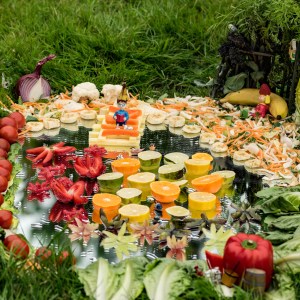
So out came a mirror (used as a lake in seed trays) and on went some fruit, vegetables and props. First shots were indoors but in natural light with much rearranging of the scenes and the start of creating  stories that one might tell children to encourage them to eat healthily. Not convinced that I had hit the mark I waited a couple of days and early one morning felt inspired to try shooting outside in the garden.
I ended up running two storylines, one about a family of bears having a tea party with mushroom stools and table and one about two children reading by a lake with an option to add in postman pat at one end of the lake. I was most proud of the grapes I sliced and opened up to make lily flowers on the lake. I liked their reflections, as if on water. The pontoon onto the lake was a late addition of carrot and cheese sticks.
Hopefully I achieved 1. food items as flowers and trees 2. healthy food items (although I might have inadvertently encouraged playing with food) 3. a little fun and artistry 4. some energy (mainly mine in setting it up!) as reading as an activity was not the best choice but I was constrained by the toys available 5. energy in that things were happening in the scenes…ducks swimming on the lake as well as reading and postman pat delivering….teddy bears laying a table and giving presents and reading the guardian…. and 6. fun…this specification will depend on feedback from others!
Ultimately I had fun and got carried away….spending quite a long time with shopping and experimenting and setting up scenes but I think only a little more than a couple of hours taking the pictures. However in retrospect I failed the brief with the complexity I added to the production and the time it took especially when processing and late delivery are taken into account. The processing and delivery were delayed by other course deadlines and personal activities which took priority. Lessons well learned for future assignments during the course in addition to commissions I might be lucky enough to be given outside the course.
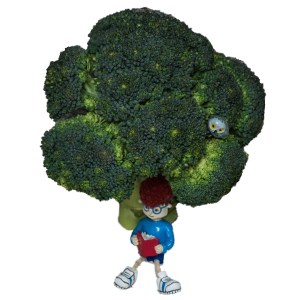
In processing the images I worked in Lightroom and moved onto Photoshop to try out recently acquired skills in masking out the background. This worked better for the mushroom and broccoli tree images but appeared odd for the others so they were left as they were with background grass and patio table included. My aim in trying this was to present the images as if floating on the white page of this post as one might see an image in a book for young children. Feedback and advice are welcome!

Oral Presentation

The first of three assignments to be submitted for the Positions and Practice Module was the Oral Presentation. The instructions were to " Conduct and record a reflective presentation on your current photographic practice. Your presentation should critically examine the motivations and objectives behind your work to date. You should also discuss your plans for your research project, and explain how it will extend from your current practice.

  • Your recorded presentation should be accompanied with examples of your work and/or other relevant material. Make sure you include clear references to any work that is not your own.
  • Your presentation should be recorded and embedded within a page of your Critical Research Journal.
  • Your presentation must not exceed 10 minutes, and submissions in any other format will not be accepted.”

This was the first time I had made such a presentation although I am used to lecturing live and writing academic pieces. It was also the first time I had used Adobe Spark Video. My initial draft presented to peers on the course described my journey in moving from my profession as a Clinical Psychologist and Clinical Neuropsychologist to becoming a professional photographer. I was using powerpoint and speaking live to the slides as I presented them in a webinar. I had been aware that I had drawn on my previous knowledge about presentations and this was confirmed when one of the comments described it as too academic.

A different approach was then taken and presented to peers and the course tutor. ‘Developing my photography’ seemed to work much better and comments received were positive about the change although I was having problems with the alignment of narration and slides in Adobe Spark Video which I was trying for the first time in this second version. I was also advised to take the music in the background off as it was distracting from my narration and given additonal references to people and activity in the area I want to focus on in my project. The comments also included reference to style and using Harvard referencing. I did try to rework the presentation using another programme Camtasia and the add-on for powerpoint (and will try this again in the future) but I ran into difficulties with audio recording and internet connections which meant I reverted to Spark Video for the final version. The programme itself is a quick way to make a file or slide presentation and offers templates with pre set fonts and layouts and a choice of music. However, the disadvantage is that you do not have choices and control over the visual presentation of the content. Again I had difficulties with the narration and slides not synchronising and spent several days trying to work out how resolve this (each time I reviewed it the overlaps in speech and slides occured in different places!). In the end,  now it is uploaded for sharing, it seems to run smoothly much to my relief!  I do hope you enjoy it.

https://spark.adobe.com/video/0Sufly16jZNYm/embed

https://spark.adobe.com/video/0Sufly16jZNYm/embed

Week 3 Collaboration

Micro project

We were asked to link up in pairs or threes by stating a word, sentence or presenting an image that would lead to a micro project to be presented and discussed at this week’s webinar.

I posted the word eyes as I am interested in looking/seeing/noticing and felt that this would offer up a range of interpretations for the micro project. I have observed and photographed birds and animals who for a brief nano second, notice and look at me while they decide that fleeing is the best option. That singular point in time is heart stopping for me as eye contact is made and I can find myself frozen to the spot not wanting to move or even take breath for fear of distressing the creature and losing the special moment. In addition, apart from birds and animals I like to observe and take note with the camera of things that it would appear others walk by. They may look but  either nothing they saw was of interest or they did not see the object or situation from the same perspective as myself.
Andrew and Alexandra joined with me, Alexandra having posted The Aftermath and Andrew the photographer Nick Knight and his image Transhuman After All, VMAN, 2013. Andrew disappeared from our group to join another. However, Darral joined when Alexandra and I had agreed to try to exchange some initial ideas around the theme of eyes. We sent lengthy emails to each other exploring various ways of considering the theme including looking at definitions, poems and songs. Alexandra suggested  a song entitled the Eyes of the World. I picked this up as written by Fairport Convention, looked into what was going on with the band when it was written and sent some comments back. Alexandra had meant the song of the same title by Grateful Dead written by Jerry Garcia!
However, in discussing ideas I had about taking an image of relationships breaking up by photographing a magazine rack in a supermarket (where such headlines appear to be prevalent), Alexandra then came across newspaper headlines relating to the General Election featuring Teresa May and Michael Gove and Jeremy Corbin. From this we developed ideas around time and patriotism with Brexit being a hot topic in the news in relation to the election results as well as relationships being a feature of the song. We went through the words of the song verse by verse and discussed the ways in which they could be illustrated using direct telephone contact in addition to email.
We agreed power point would be a good way to present our project as we were both familiar with it and Alexandra volunteered to oversee this. My job was to source some of the images, taking new and using some I had recently taken. Alexandra had already taken the news paper headlines and I went on to take an egg timer to represent time passing and offered up my image of a Union Jack on a windsock as well as an image of the South Devon coastline. Alexandra created an image of a brick wall to end the presentation with a loose brick and a crack travelling up the face of it.
The next step was creating the power point. The first draft had words of the song across the images. This was revised so that the text was at the side or below the images. We then discussed and decided who would present what in the webinar. We shared the task with Alexandra talking about setting up the piece and myself speaking about the presentation words and images. We added a ‘what have we learned’ section relating to each of our contributions. Daral was able to comment on this although he had not had time to make a substantial contribution due to other committments and because we had raced ahead with getting it finished early as Alexandra and I were both busy later in the week.
The presentation went smoothly with two of us able to attend the webinar. The process of completing this activity did feel like and was a collaboration with no lead or team roles having been specified. We agreed with the third member that other commitments may affect each of us during the course and at some point we will all be pleased to have supportive working relationships.
Our presentation notes and tutor’s feedback following the presentation at the webinar are included below.

Part 1 of Presentation: Collaboration Notes

  • Day 1: SN put up the SN put up the subject ‘Eyes’. AP put up the subject ‘Aftermath’.SN and AP formed Group 1.
  • Day 1 Evening: Group exchanged ideas, developed a direction and deadlines.
  • Overnight into Day 2: Further alignment of thinking via Canvas / 3rd member – DB joined
  • Day 2: AP took the Magazine theme suggested by SN, developed it further and took an experimental shot to illustrate it.
  • End of Day 2: Theme was developed shots agreed / allocated. A PP outline was circulated for approval. Deadlines were confirmed. Telco, all actions agreed according to availability / capability
  • Overnight into Day 3: Further email exchanges and shots (with alternatives), complete by PM. Penultimate draft of the presentation circulated / telcos for next steps / final actions discussions.
  • Overnight into Day 4: Final version agreed and made ready for presentation. Further emails exchanged re technical issues, presentation and commentary content.


Part 2 of Presentation: Presentation Notes

  • Talk through photographic interpretation of song.
  • AP suggested songs relating to eyes including Grateful Dead Eyes of the World.
  • Combining this with current affairs AP linked with the recent election results and in telco we discussed the meaning of the lyrics and interpreted them to suit a political aftermath theme.
  • The first verse begins with Right outside this lazy summers home but then notes the seasons change things: we agreed to illustrate the passage of time with the egg timer image.
  • We split the chorus into two as there was a natural change in interpretation. The first two lines mention wake up you are the eyes of the world and our hearts being with the beaches and countryside of our homeland: for this a landscape of our coastline was selected.
  • The second verse mentions a redeemer and then a descent into decay and uncertainty: hence the choice of image depicting Theresa May and Michael Gove.
  • The third verse suggests that although we visit other countries, our own is preferred. This had resonance with the current immigration issues and patriotism: hence a choice of a patriotic UK flag (we all live in the UK in this group) which happened to be on a windsock.
  • Our concluding part of the chorus tells you to wake now but beware that changes will happen outside your control and forecasts discord: hence the image of the wall where a crack and loose brick represent the dissonance.


Part 3 of Presentation: Lessons Learnt

Collaboration 

  • Parameters of project including time/ budget resource etc. – clearly understood by all from day 1 and recognising the importance of team work.
  • Given the time pressure it is an achievement to have made a product, this sort of pressure perhaps reflecting what is expected in business.
  • Individual artist’s visions can be made more compatible if there is a will.
  • The project encouraged closer working – personal and informal – reduced the isolation of distance learning.
  • Team work produced a quality piece of work in 3 days – ( be prepared for the effect on other aspects of lives).
  • Building relationships between peers encourages motivation.
  • Discussions (both verbal and written) allow open development and progression and exploration of ideas.
  • Understand / value the strength and unity that can be gained by collaboration.
  • This would be a best practice model for future tasks/assignments wherever possible

Subject

  • Interestingly we seem to have unintentionally combined both eyes and afterthought being initial words of AP and SN. We have not managed a clear link with DBs phrase, although combining these together had not been an intention.
  • What also emerged was portrayed in the last image, Another Brick in the Wall by Pink Floyd which focusses on education!
  • The song could have been interpreted differently or a different poem or song chosen.
  • The images could have remained close to the depiction of eyes as in original thoughts and discussion.
  • We could have used a Drone shot (from 3rd Group member) rather than the beautiful but standard landscape.

Tutor’s Feedback

  • Overall – A good response given time constraints.
  • Thorough preparation of final product taking advantage of skill sets within the group.
  • The layout of the photographs was not 100% complimentary .Photographs would have benefited from a full slide each rather than sharing a slide with words. Words could have occupied a separate slide.
  • If photograph format was an issue – photographs with frames or burnt edges on a white background would have improved presentation aesthetics.
  • Product would have benefitted from greater discussion / agreement on photograph size / format etc.
  • References need to be more readable i.e. great print size. Standard recommend print size on PowerPoint is 30 points.
  • Authorship should have been given recognition other than watermarks – suggest Japanese style of Sarah x Alex x Daral.
  • Presentation colours – red on blue is hard to read.